


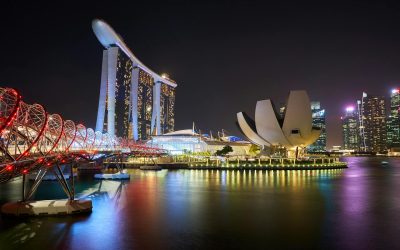
Estructuras Legales de Singapur para Inversores Extranjeros: Guía Integral de Estrategias de Planificación Patrimonial
Singapur se ha convertido en uno de los principales centros financieros de Asia, ofreciendo a los inversores extranjeros una sofisticada variedad de estructuras legales diseñadas para facilitar la planificación patrimonial, la planificación sucesoria y las estrategias de inversión internacional. Con su entorno político estable, marco regulatorio robusto y régimen fiscal atractivo, Singapur proporciona a los inversores extranjeros múltiples caminos para lograr sus objetivos de preservación y crecimiento patrimonial. La ubicación estratégica de la ciudad-estado, combinada con su amplia gama de vehículos de inversión y tratamientos fiscales favorables, la convierte en una opción cada vez más popular para individuos de alto patrimonio e inversores institucionales que buscan establecer presencia en la región de Asia-Pacífico.
Empresas Privadas Limitadas: La Base de la Inversión Extranjera
Características Legales y Estructura
The Private Limited Company (Pte Ltd) represents the most popular choice among foreign investors establishing a presence in Singapore. A Pte Ltd operates as a separate legal entity distinct from its directors, shareholders, and officers, providing crucial liability protection for investors. Foreign individuals and corporate entities can achieve 100% ownership of a Singapore Pte Ltd, making it an ideal vehicle for establishing regional holding companies or subsidiaries of international businesses. The structure requires a minimum of one shareholder and can accommodate up to 50 shareholders, with at least one resident director and a company secretary appointed within six months of incorporation.
The corporate governance framework for Pte Ltd companies follows well-established international standards, ensuring transparency and accountability in business operations. Companies must maintain proper books and records, hold annual general meetings, and file annual returns with the Accounting and Corporate Regulatory Authority (ACRA). The requirement for at least one resident director ensures local oversight while allowing foreign investors to maintain control through majority shareholding arrangements.
Ventajas Fiscales e Incentivos
Singapore’s tax regime offers compelling advantages for Pte Ltd structures, particularly for foreign investors. The corporate tax rate is set at a competitive 17% on chargeable income, which is among the lowest in the region. New start-up companies that qualify as Singapore tax residents benefit from substantial tax exemptions, including a 75% tax exemption on the first S$100,000 of chargeable income for their initial three years of operation. This incentive structure allows emerging businesses to retain more profits for reinvestment and expansion during their critical early years.
The single-tier taxation system represents another significant advantage, as corporate profits are taxed only at the company level, with dividends distributed to shareholders remaining tax-free in Singapore. Additionally, Singapore does not impose capital gains tax, making it an attractive jurisdiction for investment holding structures and businesses focused on capital appreciation strategies. The territorial tax system ensures that only Singapore-sourced income or income remitted to Singapore is subject to taxation, providing opportunities for tax optimization on international income streams.
Requisitos de Cumplimiento
Las empresas Pte Ltd deben cumplir con obligaciones de cumplimiento específicas para mantener su buen estado ante las autoridades de Singapur. Las Juntas Generales Anuales deben realizarse dentro de los 15 meses posteriores a la JGA anterior.roviding shareholders with transparency regarding the company’s financial performance and strategic direction. Companies must file annual returns within seven months of their financial year-end, including financial statements in the required XBRL format where applicable. The appointment of auditors is required within three months of incorporation unless the company qualifies for small company exemptions.
Record-keeping requirements mandate that companies maintain financial records and supporting documentation for a minimum of five years from the relevant year of assessment. Changes to company particulars, including director appointments, shareholder transfers, or registered address modifications, must be reported to ACRA within 14 days of the change. These compliance requirements, while comprehensive, are designed to maintain Singapore’s reputation as a transparent and well-regulated financial center.
Responsabilidad Limitada
Sociedades: Eficiencia Fiscal de Transparencia
Beneficios de Estructura Híbrida
Responsabilidad Limitada Partnerships (LLPs) offer foreign investors a unique hybrid structure combining partnership flexibility with corporate liability protection. LLPs operate as separate legal entities with perpetual succession, ensuring business continuity regardless of changes in partnership composition. Partners benefit from limited liability protection, as they are not personally liable for debts and losses incurred by other partners, while maintaining direct ownership of business assets.
The structure requires a minimum of two partners with no maximum limitation, accommodating various partnership arrangements and investment strategies. Foreign ownership is permitted in LLP structures, making them accessible to international investors seeking partnership-based investment vehicles. The absence of share capital requirements and simplified compliance obligations make LLPs particularly attractive for professional services firms and investment partnerships focused on operational efficiency.
Tratamiento Fiscal y Beneficios de Transparencia
LLPs are treated as pass-through entities for Singapore tax purposes, meaning the partnership itself is not subject to taxation on profits. Instead, individual partners are taxed on their share of LLP income according to their personal income tax rates, while corporate partners are taxed at the prevailing corporate tax rate of 17%. This structure can provide tax advantages for certain investor profiles, particularly where partners are tax residents of jurisdictions with favorable personal tax rates or double taxation agreements with Singapore.
However, the pass-through taxation structure means that LLPs do not qualify for corporate tax incentives and exemptions available to Pte Ltd companies. Partners must carefully consider their individual tax positions and the overall effective tax rate when evaluating LLP structures against alternative corporate forms. The ability to offset capital allowances and trade losses may be limited for corporate partners, depending on their shareholding percentage and business continuity requirements.
Simplified Requisitos de Cumplimiento
LLP compliance requirements are notably streamlined compared to corporate structures, reflecting their partnership nature. LLPs are not required to file annual returns or audit their accounts, significantly reducing administrative burdens and compliance costs. However, partnership managers must make annual solvency declarations to the Registrar, with initial declarations required within 15 months of registration and subsequent declarations at intervals not exceeding 15 months.
Record-keeping obligations require LLPs to maintain updated transaction records and financial status documentation, with failure to comply resulting in potential prosecution and penalties. All official correspondence must clearly identify the entity as an LLP, including registration numbers on bills, invoices, and business documents. Changes to partnership details must be reported within 14 days, ensuring regulatory authorities maintain current information on partnership structures and operations.
Fideicomisos Extranjeros de Singapur: Preservación Patrimonial
Sofisticada
Estructura Exclusiva para No Residentes
Los Fideicomisos Extranjeros de Singapur representan vehículos de planificación patrimonial altamente sofisticados diseñados específicamente para clientes internacionales donde cada fideicomitente y beneficiario no debe ser ciudadano ni residente de Singapur.nts of Singapore. This exclusivity ensures that the structure serves its intended purpose as an international wealth preservation and succession planning tool. Foreign companies can also participate as settlors or beneficiaries, expanding the utility of these structures for international corporate wealth planning strategies.
The trust structure must be administered by a licensed trustee company regulated by the Monetary Authority of Singapore, ensuring professional management and regulatory oversight. Licensed trustee companies are subject to rigorous regulatory requirements, including capital adequacy standards, professional indemnity insurance, and ongoing supervision by MAS. This regulatory framework provides confidence to international clients while maintaining Singapore’s reputation as a well-regulated trust jurisdiction.
Exenciones Fiscales Integrales
Singapore Foreign Trusts enjoy extensive tax exemptions on “specified income” derived from “designated investments,” making them highly attractive for international wealth planning.Specified income includes interest and dividends derived from outside Singapore, gains from the sale of designated investments, distributions from foreign unit trusts, and rental income from overseas properties. These exemptions extend to underlying Eligible Holding Companies incorporated outside Singapore and wholly owned by the foreign trust.
Designated investments encompass a broad range of assets including stocks and securities of non-Singapore companies denominated in foreign currencies, deposits with approved Singapore banks, foreign exchange transactions, Singapore Government securities, and overseas real property. The exemption from Singapore income tax on distributions to non-resident beneficiaries further enhances the tax efficiency of these structures for international wealth planning. This comprehensive tax framework supports Singapore’s objective of becoming a premier international trust jurisdiction.
Marco Regulatorio y Beneficios
Marco Regulatorio y Beneficios
Singapore Foreign Trusts benefit from a well-developed legal framework based on the Trust Companies Act of 2005, revised in 2006, which provides clarity and certainty for trust operations. The absence of registration requirements for foreign trusts simplifies establishment procedures while maintaining regulatory oversight through licensed trustee companies. Trusts enjoy a perpetuity period of 100 years, providing long-term wealth preservation capabilities for multi-generational planning strategies.
The trust framework includes built-in protection mechanisms against forced heirship rules, making it particularly valuable for clients from civil law jurisdictions seeking to preserve testamentary freedom. Optional protector appointments provide additional oversight and control mechanisms for settlors concerned about trust governance. However, it’s important to note that a sunset clause has been implemented, with foreign trusts established after March 30, 2019, not qualifying for the favorable tax treatment under Section 13G of the Singapore Income Tax Act.
Puntos Clave
- La amplia gama de estructuras legales de Singapur proporciona a los inversores extranjeros opciones sofisticadas para la planificación patrimonial, la gestión de inversiones y las estrategias de planificación sucesoria. Desde la estructura de Sociedad de Responsabilidad Limitada Privada ampliamente adoptada que ofrece protección de responsabilidad y eficiencia fiscal, hasta los Fideicomisos Extranjeros para la preservación patrimonial internacional, la jurisdicción atiende las diversas necesidades y objetivos de los inversores.
- El marco regulatorio combina una supervisión robusta con flexibilidad operativa, asegurando que Singapur mantenga su reputación como centro financiero internacional premier mientras proporciona a los inversores la confianza en sus opciones de estructuración.
- Las ventajas fiscales disponibles en las diversas estructuras legales de Singapur, incluyendo las tasas corporativas competitivas, las exenciones para fideicomisos extranjeros y el tratamiento favorable de las ganancias de capital, hacen de la jurisdicción un centro atractivo para la planificación fiscal internacional.
- A medida que el panorama regulatorio global continúa evolucionando, el compromiso de Singapur con los estándares internacionales, combinado con su enfoque pragmático de la regulación empresarial, posiciona a la jurisdicción como un destino cada vez más importante para los inversores extranjeros que buscan estructurar sus asuntos internacionales de manera efectiva y conforme a las normas.