



Trust Structures Under Pressure: What U.S. Beneficiaries Must Know in 2025
U.S. Beneficiary Considerations in Offshore Trusts After the Trident Trust Investigations: Navigating Regulatory Shifts and Compliance Imperatives
The U.S. Department of Justice (DOJ) and Internal Revenue Service (IRS) have fundamentally reshaped the compliance landscape for offshore trusts with U.S. beneficiaries through their 2025 John Doe summons targeting Trident Trust Group and related entities.
This landmark regulatory action, combined with recent judicial decisions involving Trident Trust’s operations in South Dakota and Guernsey, creates urgent considerations for trust beneficiaries, settlors, and advisors. This article examines the structural, reporting, and enforcement implications flowing from these developments, with particular focus on U.S. persons benefiting from offshore trust structures.
The Trident Trust Investigations: A New Enforcement Paradigm
The DOJ’s three federal court actions against Trident Trust entities seek records spanning 2014–2023 involving U.S. taxpayers, defined expansively to include anyone with U.S. addresses, phone numbers, or family connections. This represents a strategic escalation in cross-border trust oversight:

Redefined U.S. Taxpayer Status
Courts authorized an unprecedented interpretation of “U.S. taxpayer” encompassing non-resident aliens maintaining incidental U.S. contacts (e.g., vacation property addresses, temporary mobile numbers). For foreign-domiciled trusts with U.S. beneficiaries, this expands reporting obligations under 26 U.S.C. § 6039F for foreign gifts exceeding $100,000.
Multi-Jurisdictional Targeting
The summonses specifically compel disclosure from Trident’s New York affiliate (Nevis Services Limited) and South Dakota trust operations, reflecting increased scrutiny of domestic trust company activities facilitating offshore structures. The Pandora Papers investigation previously identified $1 billion in suspect assets held through South Dakota trusts, demonstrating regulatory focus on domestic “tax haven” jurisdictions.
Beneficiary-Chain Liability
The IRS now traces beneficial ownership through layered entities, with particular attention to U.S.-resident secondary beneficiaries (e.g., spouses/descendants of foreign settlors). This challenges traditional asset-protection strategies relying on discretionary distributions to non-U.S. beneficiaries.
Critical Implications for U.S. Beneficiaries
1. Spendthrift Protections Under Siege
The Cameron Family Trust litigation illustrates growing judicial willingness to pierce spendthrift provisions for U.S. beneficiaries’ obligations. When Cleopatra Cameron’s trust relocated from California to South Dakota, courts upheld the spendthrift clause against direct child support payments but emphasized that:
- Forum Selection Limitations: While South Dakota law governs trust administration post-situs change, U.S. courts retain authority to enforce beneficiary obligations through alternate means (e.g., contempt orders against trustees).
- Beneficiary Disclosure Requirements: South Dakota’s § 55-1B-6 requires trustees to disclose beneficiary information to courts, creating potential discovery pathways for creditors.
This creates tension between asset protection goals and U.S. beneficiaries’ personal liabilities, particularly for divorce-related claims or tax debts.
2. State-Specific Risks in Domestic Trust Havens
South Dakota’s trust industry growth (300% since 2010) faces regulatory reckoning:
- Perpetual Dynasty Trust Vulnerabilities: The IRS proposals to prohibit GST exemptions for perpetual trusts directly threaten South Dakota’s 100-year dynasty structures. Trustees must model tax exposure scenarios assuming retroactive application.
- Enhanced State/Federal Coordination: The Trident summonses include South Dakota-based vendors and banks, signaling IRS collaboration with state regulators to audit trust service providers.
3. Beneficiary Reporting Complexities
U.S. beneficiaries now face layered disclosure requirements:
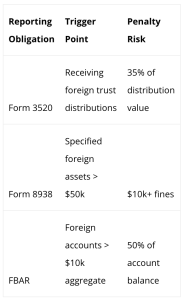
The expanded “U.S. taxpayer” definition implicates beneficiaries who:
- Hold signatory authority over foreign trust accounts
- Receive indirect distributions via LLC intermediaries
- Reside temporarily in the U.S. during distribution periods
Compliance Strategies for High-Net-Worth Families
1. Trust Restructuring Considerations
- Decanting Opportunities: South Dakota’s § 55-1B-16 permits trust modifications to address beneficiary vulnerabilities. Example: Creating sub-trusts for U.S. beneficiaries with standalone tax compliance mechanisms.
- Protector Role Enhancements: The Cameron case highlights protectors’ duty to monitor situs-related risks. Protectors should implement:
- Annual U.S. beneficiary tax audits
- Distribution committees for IRS-reportable payments
- Jurisdiction exit plans tied to beneficiary residency changes
2. Documenting Non-Tax Compliance
The Guernsey Financial Services Commission’s £266k fine against Trident emphasizes procedural gaps:
- Beneficiary Due Diligence Files must now include:
- 10-year residency history
- U.S. property/phone records
- Family court judgments (child support/alimony)
- Distribution Paper Trails requiring:
- IRS Form W-9 collection before payments
- 1099 issuance for taxable distributions
- Currency transaction reports for >$10k cash transfer

3. Litigation Preparedness
The Pandora Papers identified 30+ Trident trusts linked to alleged misconduct. To mitigate successor liability risks:
- Beneficiary Indemnity Agreements: Requiring U.S. beneficiaries to warrant asset provenance and fund legal defenses for trustees.
- Dynamic Arbitration Clauses: Specifying ICDR or JAMS rules with expedited procedures for IRS disputes.

Future Regulatory Horizons
Federal Legislation Proposals: The Senate Finance Committee’s 2025 draft bill includes:
-
- Public disclosure of trust beneficial ownership (excluding South Dakota trusts)
- 40% excise tax on undistributed trust income exceeding $5 million
- Retroactive application to trusts created post-2001
State-Level Responses: South Dakota’s proposed HB 1297 would:
-
- Require biennial trust audits for IRS compliance
- Ban protector appointments lacking U.S. tax law certification
Strategic Reassessment Imperative
The Trident Trust investigations mark a regulatory inflection point demanding immediate action from U.S. trust beneficiaries and their advisors. With the IRS deploying John Doe summonses as standard investigative tools and courts narrowing traditional asset protection mechanisms, beneficiaries must:
- Conduct forensic audits of trust distributions since 2014
- Restructure discretionary interests into protected sub-trusts
- Implement real-time tax compliance monitoring systems
Failure to adapt risks not only substantial penalties but potential criminal referrals under 31 U.S.C. § 5322 for willful reporting violations. As cross-border trust administration enters this heightened enforcement era, proactive engagement with specialized counsel becomes essential to preserving wealth transfer objectives while mitigating personal liability exposures.